What you see, hear and plan
Samulnori and NANTA: What You'll Hear
What happens on stage, the four samulnori instruments behind the sound, and how to reach each Seoul theatre, with access, children and photo rules.
Check dates and availability ↗Quick answer
NANTA is a non-verbal comedy set in a kitchen. Its sound comes from Korean samulnori rhythm, played on knives, cutting boards and water canisters rather than on the traditional instruments. The show runs about one and a half hours and has no spoken script to follow, so language does not matter. Allow time to find the theatre. Myeongdong is on the third floor of the UNESCO Building, Hongdae is two levels below ground, and neither has parking.
What happens on stage
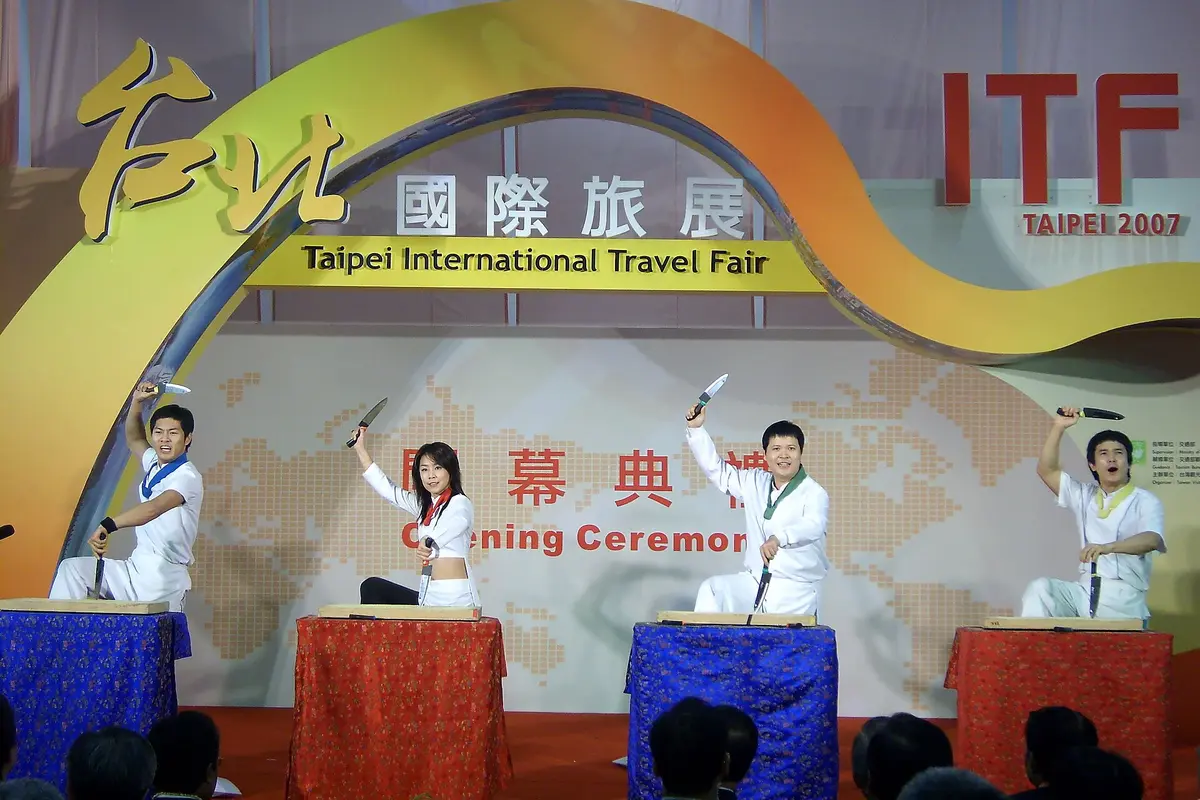
The story is simple. A kitchen team has a strict time limit to prepare a wedding banquet, and the manager brings in his incompetent nephew to make it worse. Around that sit acrobatics, mime and comedy. The audience is drawn in too. The theatre says audience members can play the bride and groom in a traditional Korean wedding ceremony, compete in piling up dumplings and play rhythm on stage. Nothing says you will be picked, and the theatre does not publish how people are chosen.
Read next: Inside NANTA's Story: Plot, Subplots and Audience Games
Samulnori in two minutes
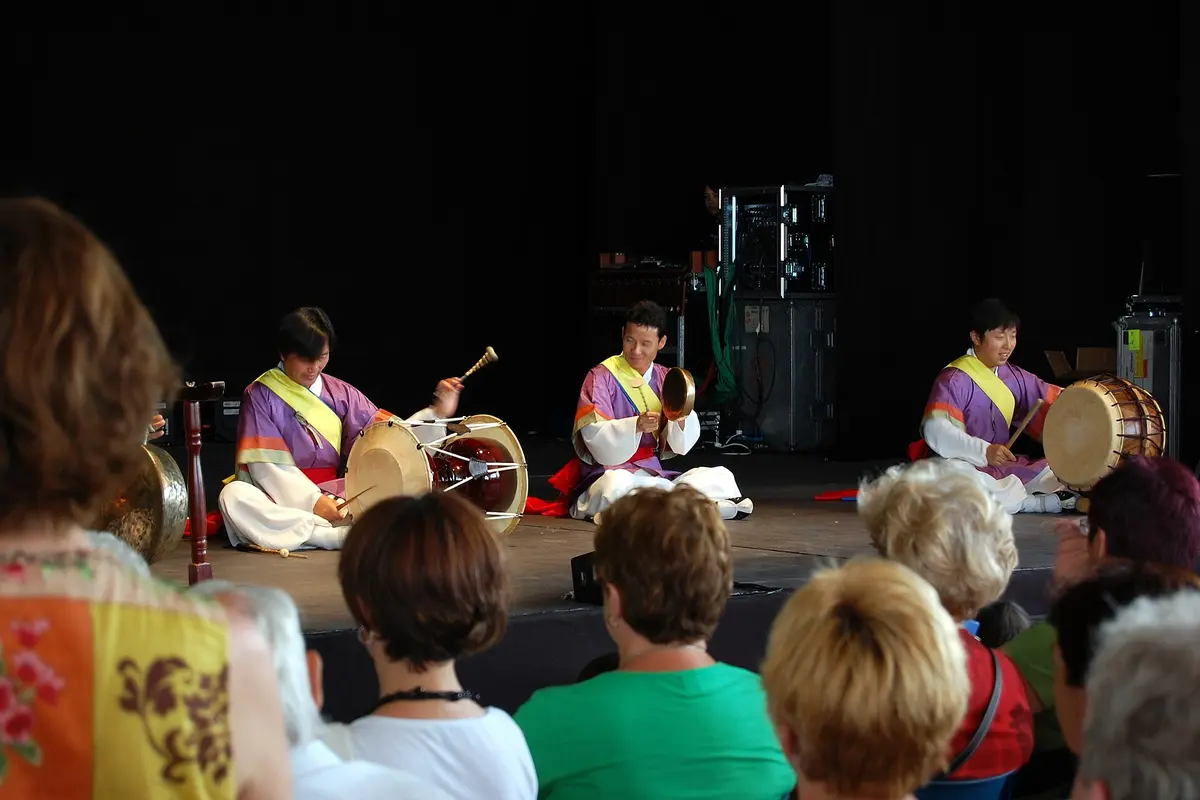
Samulnori means four objects play. It is a genre of Korean percussion music played on four traditional instruments, and it is a modern adaptation of nongak, the farmers' ritual music that was played outdoors. Nongak involved costumed dances and large bands in constant motion. Samulnori moves the music indoors and puts the players at the centre, seated. Its first performance was in a small Seoul theatre in 1978. UNESCO later inscribed nongak on its Representative List of the Intangible Cultural Heritage of Humanity.
The four instruments
NANTA does not play these four instruments as such. Its performers use improvised ones: cutting boards, water canisters and kitchen knives. What the show borrows is the rhythmic tradition, which the theatre describes as samulnori rhythm combined with comedy and drama in a kitchen. Listen for the pattern more than the objects: the sound is built from interlocking beats. If you want to hear the originals afterwards, these are the four to listen for.
- Kkwaenggwari: a small brass gong with a high, metallic tone
- Jing: a large gong, able to sound gentle and lingering or big and roaring
- Janggu: an hourglass drum with two heads that sound at different pitches
- Buk: a shallow barrel drum covered at both ends
Why you need no Korean
NANTA is non-verbal, so there are no subtitles to read and no script to follow. The story runs on music and movement, which is how the show has travelled so widely: the producer's own figures put it at more than 300 cities in more than 50 countries. One reference work notes that the very few words spoken are mostly in English. The theatre's own website comes in Korean, English, Chinese and Japanese. You do not need any of them to follow the performance itself, so a mixed group of nationalities can sit together and watch the same thing.
How long it lasts
Plan for about one and a half hours. The theatres' pages do not state whether there is an interval, so plan on a continuous show and use the restroom before you go in. Latecomers are shown in by an usher, and entry may be limited if there is no space for late seating, so arrive early. The cast changes by performance, and the monthly calendar on each theatre's page shows which team plays on which date, so you cannot choose who you see. Treat the running time as approximate. The booking calendar and your confirmation show the start time.
Read next: NANTA Tickets: Myeongdong or Hongdae?
Getting to Myeongdong
The Myeongdong theatre is on the third floor of the UNESCO Building at 26 Myeongdong-gil, Jung-gu. The theatre's own directions give two subway routes. From Euljiro 1-ga Station on Line 2, use the stairway between exits 5 and 6, about five minutes on foot. From Myeongdong Station on Line 4, take exit 6 toward the Myeongdong walking street, then turn left at the Myeongdong Theatre, which is not the NANTA theatre. That route is about ten minutes. There is no parking, and the theatre warns of traffic congestion in the area.
Getting to Hongdae
The Hongdae theatre is on basement level 2 of a yellow diamond-shaped building called A-LAND, at 29 Yanghwa-ro 16-gil, Mapo-gu. Take Line 2 to Hongik University Station and leave by exit 9. The theatre's own directions give about five minutes on foot from there, going straight and then turning left. The theatre's directions add that you pass a convenience store on your right before reaching the building, so look for the A-LAND name on the front. It also has no parking and recommends public transport.
Around the Myeongdong theatre
Myeongdong is one of Seoul's main shopping, parade route and tourism districts, known for Korean cosmetics brands and international shops. The main street and most of the alleys are closed to traffic, so you can walk around freely before or after the show. Myeongdong Cathedral, the oldest Catholic cathedral in Korea, is one of the area's two historically significant sites, and the neighbourhood has been a gathering place for political demonstrations over the decades. The theatre is in the UNESCO Building, so you can combine the show with a walk through the district, then leave by the same stations.
Wheelchair access
Both theatres list wheelchair seating, with conditions, and ask you to contact them before you book. At Myeongdong, wheelchair access is not through the main entrance of the UNESCO Building but through the back one. There are stairs at the entrance to the seating area, so a wheelchair must be carried, and the aisles are narrow. The theatre asks you to arrive at least 10 minutes before the show. At Hongdae, the second-floor seats are reached by stairs, which makes wheelchair access difficult there. Accessible restrooms are listed at both.
Children, photos and clothing
The theatre admits children from 12 months, though this booking does not admit infants under 1 year old. Under the theatre's own terms, children up to 35 months go free and a ticket is required from age 3. Photos are allowed during the curtain call only. Using a camera or phone to record during the performance without prior consent is strictly prohibited. The theatres' pages set no dress code, so wear whatever is comfortable for sitting for about an hour and a half.
Who this isn't for
If you want to hear samulnori on its four traditional instruments, NANTA is the wrong show: it borrows the rhythm but plays kitchen equipment. If you need wheelchair access, you must contact the theatre in advance, and the stairs at both venues limit what is possible. And if you want a quiet evening, remember that this is a percussion show with audience participation, built on impact sounds and physical comedy.
Frequently asked questions
How long is the NANTA show?
About one and a half hours. The theatres' pages do not state whether there is an interval, so plan on a continuous show and use the restroom before it starts.
What is samulnori?
A genre of Korean percussion music whose name means four objects play. It is played on four traditional instruments, the kkwaenggwari, jing, janggu and buk, and it adapts the farmers' ritual music nongak for the indoor stage.
Do I need to speak Korean to enjoy NANTA?
No. NANTA is non-verbal, so the story runs on music, mime and movement, and there are no subtitles to read. The theatre's website is in Korean, English, Chinese and Japanese.
Can I take photos at NANTA?
Only during the curtain call. Using a camera or phone to record during the performance without prior consent is strictly prohibited by the theatre.
Is NANTA wheelchair accessible?
Both theatres have wheelchair seats, but access has conditions. At Myeongdong, wheelchairs enter by the back of the UNESCO Building and are carried up stairs to the seating area. At Hongdae, second-floor seats are reached by stairs. Contact the theatre before you book.
How do I get to a NANTA theatre by subway?
For Myeongdong, use Euljiro 1-ga Station on Line 2, or Myeongdong Station on Line 4 and exit 6. For Hongdae, use Hongik University Station on Line 2 and exit 9. Neither theatre has parking.
Sources